


Get a free quote
"(Required)" indicates required fields
International Moving Timeline: Start Planning Earlier Than You Think
International moves generally require more preparation than local or interstate relocations.
Your belongings may be travelling for several weeks, customs documentation needs to be prepared and destination requirements can differ substantially from one country to another.
Starting around 12 to 16 weeks before departure gives you time to make informed decisions without trying to organise everything during the final weeks.
International Moving Checklist: Australia to Overseas
An overseas move has more administrative moving parts than a domestic relocation.
Use this checklist as a starting point, then add the customs, biosecurity and residency requirements specific to your destination.
Passports, Visas and Documentation
- Check passport expiry dates.
- Confirm destination-country passport requirements.
- Progress the appropriate visa or residency applications.
- Keep digital and paper copies of important immigration documents.
- Arrange mail redirection where required.
- Notify relevant Australian organisations of your departure.
- Update your contact details where necessary.
- Keep shipment and customs documents accessible.
NUSS is not a registered migration agent and does not provide immigration advice. Where specialist immigration assistance is required, professional advice should be obtained separately.

Finances
- Tell your bank you are moving overseas.
- Confirm how you will retain access to Australian accounts.
- Research banking arrangements at your destination.
- Review international transaction fees.
- Consider how larger international transfers will be handled.
- Update billing addresses.
- Seek professional tax advice if your residency status may change.

Health and Medical
- Request medical records.
- Request dental records.
- Obtain copies of prescriptions.
- Check whether your medication is permitted at your destination.
- Review vaccination or health-entry requirements.
- Arrange sufficient medication for the transition period where legally permitted.
- Research medical services near your new home.

Your Australian Property
- Complete end-of-lease obligations where applicable.
- Arrange cleaning.
- Coordinate property settlement if selling.
- Disconnect or transfer electricity and gas.
- Cancel or transfer internet services.
- Return keys.
- Review home and contents insurance.
- Arrange management of any Australian property you are retaining.

Your International Shipment
- Complete a home or video survey.
- Confirm your packing and collection dates.
- Decide between FCL, LCL and/or air freight.
- Review your detailed household inventory.
- Identify valuable or specialist belongings.
- Declare potentially restricted items.
- Complete the customs forms and declarations applicable to your destination.
- Decide whether to arrange transit insurance.
- Keep copies of shipment documents with you.
- Confirm the expected destination customs and delivery process.
Belongings Staying in Australia
Decide what you will:
- store
- sell
- donate
- dispose of
- leave with family or friends
NUSS provides managed storage at its Lane Cove facility for belongings that are not travelling overseas or need to remain in Sydney temporarily.
Ready to start planning?
Sea Freight vs Air Freight for International Moves
One of the first decisions when moving overseas is how your belongings will travel.
For many households, the choice is not necessarily sea or air freight.
You may use sea freight for most of the household while carrying immediate essentials with you or arranging a smaller air-freight shipment for priority belongings.

Sea Freight
Sea freight is the standard option for larger international household moves.
It can accommodate:
- furniture
- household cartons
- appliances
- clothing
- books
- larger personal belongings
- full household contents
Its main advantage is practicality and cost efficiency for larger shipment volumes.
The trade-off is time.
International sea freight is generally measured in weeks rather than days, and the overall door-to-door timeframe includes more than the vessel journey. Collection, export processing, shipping schedules, destination customs and final delivery all contribute to the total timeframe.
The exact timing varies considerably by destination and service.
Sea freight is generally suited to:
- complete household moves
- furniture shipments
- larger volumes
- families relocating permanently
- customers able to plan around a longer transit period
Air Freight
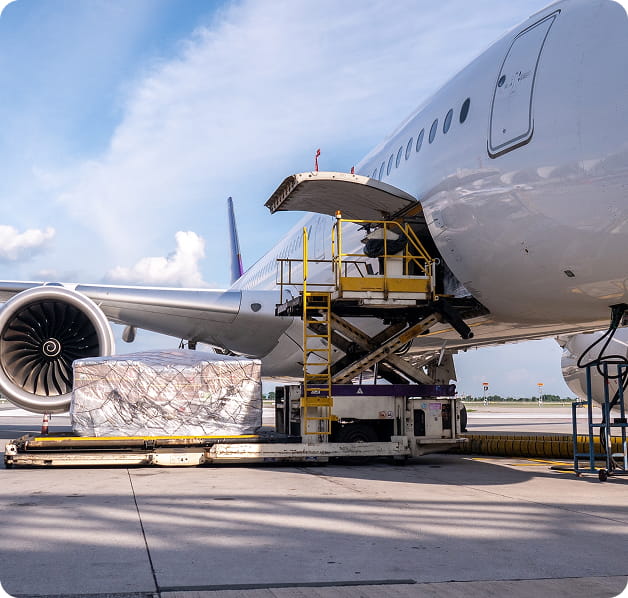
Air freight is considerably faster than sea freight but can become expensive for larger household volumes.
It is generally better suited to a smaller shipment containing belongings you need relatively soon after arrival.
Examples include:
- work equipment
- clothing
- children's essentials
- selected personal belongings
- smaller high-priority household items
Air freight still involves export handling, airline arrangements and destination customs clearance, so it should not be confused with passenger luggage or ordinary courier delivery.
Air freight is generally suited to:
- smaller shipments
- priority belongings
- customers relocating with limited furniture
- essentials required before the main sea shipment arrives
NUSS can arrange air freight to all international destinations as either the main freight method for an appropriate shipment or alongside sea freight for selected belongings.
Should You Use Both Sea and Air Freight?
For some relocations, yes.
A practical way to divide your household is:
- What travels with you
- What you need relatively soon
- What can arrive with the main sea shipment
This prevents a handful of urgent items from determining the freight method for your entire household.
FCL vs LCL: Full Container Load or Less than Container Load?
If your belongings are travelling by sea, you are likely to hear the terms FCL and LCL.
They describe how shipping-container capacity is allocated.
Customs and Biosecurity When Moving Overseas from Australia
Customs is one of the areas people worry about most when moving internationally, largely because there is no single global process.
There are two sides to consider: what is required when your household shipment leaves Australia and what your destination country requires before allowing your belongings to enter.
Leaving Australia
International household shipments require documentation identifying what is being exported.
The exact export process depends on the shipment, goods and transport arrangements.
Some belongings may require additional attention because of transport or biosecurity restrictions, including:
- soil-contaminated items
- plant material
- animal products
- food
- untreated natural materials
- hazardous goods
- certain batteries or chemicals
Outdoor equipment should be cleaned thoroughly before packing, particularly anything that has been in contact with soil, plants or other organic material.
Customs at Your Destination
Every country has its own household-goods import process.
Common documentation can include:
- passport identification
- visa or residency information
- detailed household inventory
- customs declarations
- evidence supporting your reason for relocating
- documentation for restricted, taxable or specialist belongings
The requirements should always be confirmed for your actual destination rather than copied from another country's process.
What Is Transfer-of-Residence Relief?
Some countries offer customs or tax concessions when someone genuinely transfers their normal residence and imports personal belongings they have already owned and used.
The eligibility requirements, terminology and application process differ between destinations.
For example, the United Kingdom has its own Transfer of Residence process, while Germany, France, the Netherlands, Singapore and other destinations use different relocation-goods or household-effects arrangements.
NUSS coordinates customs clearance with its destination moving partner.
NUSS coordinates customs clearance with its destination moving partner. The destination partner normally provides the appropriate forms and guidance, while you complete the personal declarations and provide the required information.
Where the local process allows, the destination partner generally lodges the forms with the relevant authority. Some countries instead require customers to submit particular declarations online themselves.
Declare Your Belongings Accurately
Your household inventory is an important customs document.
Do not deliberately leave out restricted, taxable or regulated belongings in the hope they will pass unnoticed.
Incorrect or incomplete declarations can cause delays, inspection and penalties depending on the destination.
If you are uncertain about an item, raise it with your consultant before it is packed.
Quarantine and Biosecurity
Some destinations apply particularly strict controls to goods that could carry pests or diseases.
Items receiving additional attention can include:
- outdoor furniture
- gardening equipment
- soil
- plants and plant products
- animal products
- food
- seeds
- timber and natural materials
The rules are destination-specific.
A New Zealand household shipment, for example, has different biosecurity considerations from a relocation to the UK, Canada, Singapore or France.
That is why NUSS plans customs and destination preparation around the country you are actually moving to.
What You Can't Take When Moving Overseas from Australia
There is no single worldwide list of items that can and cannot be shipped from Australia.
The removalist, shipping line, airline and destination country's laws can each apply their own restrictions.
Several categories commonly require additional checks.
What Happens After Your Shipment Leaves Australia?
Once your household shipment has been collected, there are still several stages before it reaches your new home.
Depending on the destination and freight method, the process can include:
International Moving FAQ
How far in advance should I book an international removalist?
Starting around 12 to 16 weeks before your intended move gives you time to complete a home or video survey, compare freight options, prepare customs documentation and work through what you are actually taking.
Some routes and busy periods may require additional notice, so it is worth starting once your relocation becomes likely.
Do I need to be home for international packing and collection?
You or an authorised representative should generally be available during the packing and collection process.
The crew may need decisions about individual belongings, and your inventory and move documentation should be reviewed carefully before the shipment leaves your property.
How long does it take to ship belongings overseas?
There is no single international transit time.
Air freight is considerably faster than sea freight, while sea shipments are normally measured in weeks.
The destination, FCL or LCL service, vessel schedules, customs clearance, biosecurity inspections and final inland delivery can all affect the overall timeframe.
Your NUSS consultant can provide an indicative door-to-door timeframe for your actual destination.
What happens if my shipment is delayed?
International freight schedules can change because of vessel movements, port congestion, weather, customs processing and other factors outside the moving company's control.
Build flexibility into your arrival plans and keep enough clothing, medication and immediate essentials with you to cover the period before the main household shipment arrives.
Can I track my international shipment?
NUSS keeps customers informed about important stages of their international move, with your consultant remaining the primary point of contact throughout the relocation.
The exact tracking information available depends on the freight method, shipping service and destination arrangements.
Does NUSS deliver my belongings overseas itself?
NUSS coordinates the Sydney side of your relocation and works with destination moving partners for the overseas customs, handling and delivery stages.
Its international network includes FIDI, OMNI and IAM partners and supports relocations to more than 180 countries.
Do I need transit insurance when moving overseas?
Transit insurance is optional rather than automatically included.
NUSS can arrange transit and storage insurance for international relocations, including comprehensive replacement-value cover in appropriate circumstances.
Policy conditions differ depending on how the shipment is packed, and restrictions can apply to owner-packed belongings.
Your consultant can provide the relevant insurance documentation so you can decide what level of cover is appropriate.
Can I pack my own boxes?
Yes.
Customers can pack some or all of their own belongings, but self-packing can affect insurance conditions and the way certain items are covered.
Discuss this with your consultant before packing so you understand the implications.
Can NUSS arrange storage while I'm overseas?
Yes.
NUSS provides managed storage at its Lane Cove facility for belongings remaining in Sydney.
Temporary storage can also be coordinated through destination partners internationally where required.
What should I do with belongings I'm not taking overseas?
Before the move, decide whether unwanted or unnecessary belongings should be:
- sold
- donated
- disposed of
- left with family
- placed into storage
NUSS can arrange managed storage in Lane Cove for belongings you want to keep in Australia.
Planning an International Move from Sydney?
Whether you are moving from Sydney to the United Kingdom, United States, New Zealand, Singapore, Hong Kong, Canada, the UAE, Germany, France, the Netherlands or another destination, the best place to start is with a clear understanding of what you are taking and when you expect to move.
NUSS coordinates international relocations to more than 180 countries and is a FIDI FAIMPLUS Top Performer in Sydney, with a 100% FIDI compliance audit result independently assessed by EY.
A NUSS international moving consultant can arrange a home or video survey, assess your shipment volume and prepare a free, no-obligation quotation covering the packing, freight, insurance, storage and destination services required for your move.